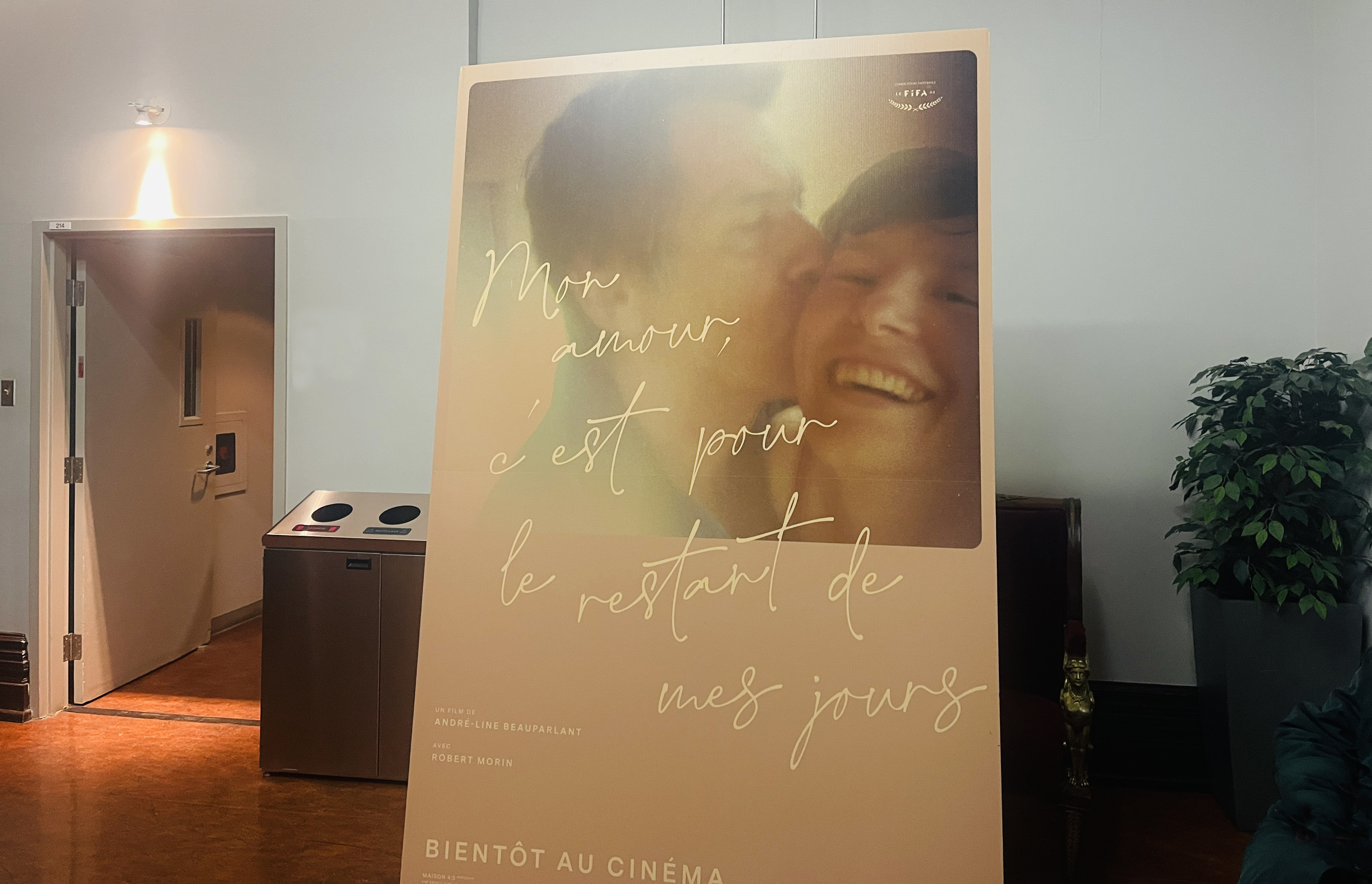

On Thursday, March 12, the Festival International du Film sur l’Art (FIFA) opened its 44th edition at the Monument-National, one of the most important film events dedicated to cinema about art. The film chosen to open the festival was the documentary Mon amour, c’est pour les restant de mes jours, directed by Quebec filmmaker André-Line Beauparlant, an intimate work that explores the life and work of her partner, filmmaker Robert Morin.
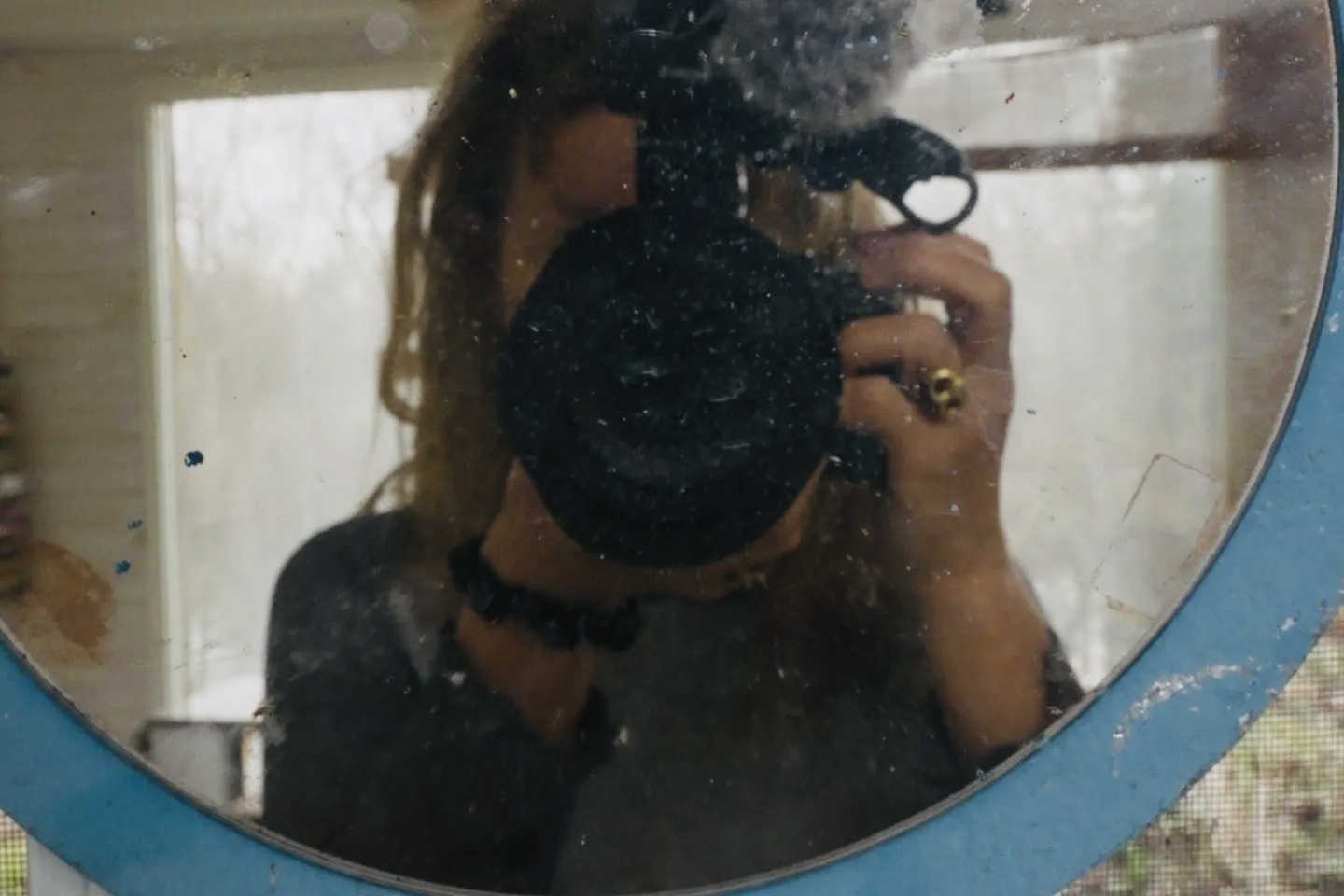
Running 95 minutes and narrated in Quebec French, the film unfolds as a deeply personal portrait. Beauparlant, known for her work as an art director on numerous Quebec film productions and for documentaries about members of her own family, turns her camera here toward the partner with whom she has shared her life for decades.
The two met when Morin was 44 and Beauparlant 27. She was just beginning her career in cinema and was working as a set decorator on Morin’s film Windigo (1994). From that encounter began a relationship that, over time, also evolved into a creative dialogue.
The documentary adopts a curiously dual form. Beauparlant almost never appears on screen, yet her presence is constant: we hear her voice, her reflections, and the questions and statements she directs to Morin. The film thus works as a kind of intimate diptych. On one side is the portrait of the filmmaker; on the other, the loving (and at times inquisitive) gaze of the person observing him.
With more than thirty-five films in his career, Morin emerges as a deeply atypical figure within Canadian cinema. He has never pursued commercial filmmaking. Over the years his work has moved through different formats, from Super 8 to magnetic video and, more recently, digital media. By revisiting her partner’s archives, Beauparlant shows how each technological shift became for him an opportunity for exploration.
When she asks him how he would define his art, Morin responds with disarming honesty: he is interested in showing things that unsettle people, images that make viewers uncomfortable. He confesses that making art is what helps him fight depression; art, he admits, is his addiction.
In one of the documentary’s most revealing passages, Morin speaks about “the weight of dreams”: the films that exist in one’s imagination but are never completed. For him, part of the craft lies in accepting the failure of certain projects that will never see the light of day. And yet, whenever he sits down at his computer, he feels as if he has entered a kind of sanctuary.
This absolute dedication to artistic work also implies a degree of selfishness, the filmmaker acknowledges. He explains that he has always tried to avoid distractions that might take time away from his creative practice. He had two children from previous relationships, but with Beauparlant he did not build a family in that sense.
As the conversation unfolds, a darker dimension of Morin’s biography also emerges. He recalls a traumatic childhood event: he was walking with a friend when suddenly a bus struck the boy. The child died instantly while Morin remained unharmed. The image of blood and bones deeply marked his memory; for several days, he says, he even lost his sense of time.
Death would appear again in other ways throughout his life. His father was injured in a collision with a train and remained bedridden for years, and their relationship was distant and lacking affection. Later, his mother died in a fire caused by Christmas decorations.
And yet the documentary makes clear that Morin is not a dark or fatalistic figure. Rather, he seems to be someone who has learned to live with the constant presence of loss.
This reflection on death also runs through the film project Morin attempts to make during the years Beauparlant is filming him. It is a fiction centered on a moose wounded by an arrow who, aware of his fate, lies down in the forest to await death. The director hopes to film how the animal’s body becomes food for other creatures (bears, coyotes, scavengers) and eventually decomposes.
But nature does not cooperate with the script. Only a few vultures, some birds, and occasionally a fox appear. The filmmaker’s persistence in trying to capture the moment becomes almost absurd and, at the same time, deeply human. At one point he even resorts to small manual tricks to simulate the breathing of the dying moose, hoping to record the animal’s final gasps.
In contrast to this obsession with death, Beauparlant’s documentary seems guided by another force. At one point in the film, Morin asks his partner whether she thinks about death. She answers that she does not. He, on the other hand, admits that he thinks about it often.
She then formulates a quiet conclusion: if Morin’s film about the moose is an attempt to understand death, hers is, instead, a film about love.
The opening screening also had a special element: both André-Line Beauparlant and Robert Morin were present in the theater, sharing the experience with the audience. It is one of the small kinds of magic that film festivals manage to weave, the direct encounter between a work and the people who created it.
For Morin, the evening carried particular significance. It was the first time he had seen the completed documentary his partner had made about him. Before the screening began, Beauparlant tried to reassure him with a simple phrase: “Everything will be fine, Robert.”
When the lights came up at the end of the film, unanimous applause filled the room. Visibly moved (and perhaps a little overwhelmed by the attention) Beauparlant and Morin went up together to the cinema podium to thank the audience. He told her then that she had done a tremendous job; she received the comment with genuine surprise and a smile.
Thus, amid emotion, complicity, and cinema, the first screening of the 44th edition of the Festival International du Film sur l’Art was officially inaugurated.
Love, Cinema, and Mortality: Opening Night of the 44th Festival International du Film sur l’Art